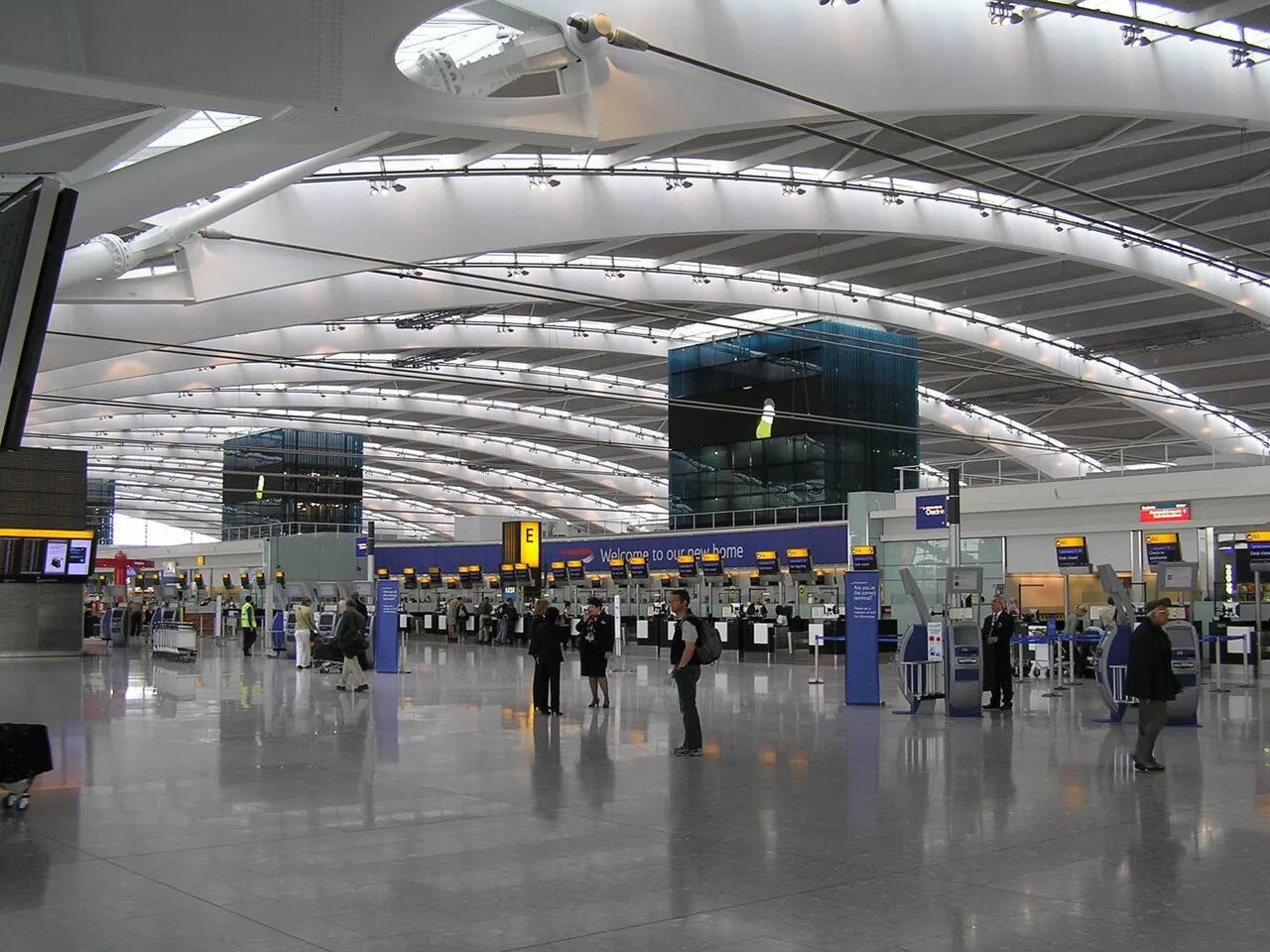
Which flights are covered by UK261?
UK261 is the UK's post-Brexit version of EU261, written into domestic law through The Air Passenger Rights and Air Travel Organisers' Licensing (Amendment) (EU Exit) Regulations 2019. The rules are functionally identical to the EU regulation they replaced, with one practical difference: compensation is paid in pounds sterling rather than euros.
UK261 is the UK's post-Brexit version of EU261, written into domestic law through The Air Passenger Rights and Air Travel Organisers' Licensing (Amendment) (EU Exit) Regulations 2019. The rules are functionally identical to the EU regulation they replaced, with one practical difference: compensation is paid in pounds sterling rather than euros.
Coverage follows a simple two-part test. First, any flight departing a UK airport is covered regardless of which airline operates it — so a British Airways flight from Heathrow to New York qualifies, but so does an Emirates flight from Manchester to Dubai. Second, flights arriving in the UK are covered only if operated by a UK or EU airline — a BA flight from New York to Heathrow is covered, but an American Airlines flight on the same route is not. Flights arriving in the EU on a UK carrier are also covered.
The operating carrier matters, not the booking agent. If you booked through a travel agent or codeshare but flew on a different airline's metal, it is the airline that physically operated the flight that owes compensation. A BA-marketed flight operated by American Airlines from New York to London falls outside UK261 because American is neither a UK nor EU carrier.
How much compensation can you claim?
UK261 sets fixed compensation tiers based on flight distance and arrival delay — not on your ticket price or the inconvenience you suffered. The clock starts when at least one aircraft door opens at your final destination, not when the flight departs. If your plane left four hours late but landed two hours 55 minutes behind schedule, you are not eligible.
UK261 sets fixed compensation tiers based on flight distance and arrival delay — not on your ticket price or the inconvenience you suffered. The clock starts when at least one aircraft door opens at your final destination, not when the flight departs. If your plane left four hours late but landed two hours 55 minutes behind schedule, you are not eligible.
For flights up to 1,500 km (roughly London to Rome or Edinburgh), a delay of 3+ hours at arrival triggers £220 per passenger. For flights between 1,500 km and 3,500 km (London to Cairo, Manchester to Tenerife), the figure is £350. For flights over 3,500 km — most long-haul routes from the UK — compensation is £260 if you arrive 3 to 4 hours late, rising to £520 if the delay reaches 4 hours or more.
Each passenger named on the booking is entitled to the full amount individually, including children. A family of four delayed 4+ hours on a long-haul return could theoretically claim £2,080 on the outbound alone. Compensation is per direction — a delayed outbound and a delayed inbound are two separate claims.
When is the airline actually liable?
Airlines only owe compensation when the delay was within their control. Staff shortages — including crew sickness, which UK courts have repeatedly ruled is not an "extraordinary circumstance" — technical faults with the aircraft, and operational decisions like overbooking all typically qualify. The landmark 2024–2025 court rulings on crew sickness removed one of the airlines' most commonly cited rejection reasons.
Airlines only owe compensation when the delay was within their control. Staff shortages — including crew sickness, which UK courts have repeatedly ruled is not an "extraordinary circumstance" — technical faults with the aircraft, and operational decisions like overbooking all typically qualify. The landmark 2024–2025 court rulings on crew sickness removed one of the airlines' most commonly cited rejection reasons.
Extraordinary circumstances that exempt the airline include severe weather that makes flying unsafe, air traffic control restrictions beyond the airline's control, security threats, and political instability. Strikes by airport ground staff or ATC are generally extraordinary; strikes by the airline's own pilots or cabin crew usually are not.
Airlines frequently reject valid claims on extraordinary-circumstances grounds. If your claim is rejected, do not assume the airline is correct — escalate through the channels below. Many initially rejected claims succeed on appeal, particularly where the airline cites vague "operational reasons" without evidence.
Care and assistance during the delay
Separate from compensation, UK261 requires airlines to provide care when your flight is delayed by 2+ hours (for short-haul), 3+ hours (medium-haul), or 4+ hours (long-haul). This means meals and refreshments proportionate to the wait, two free phone calls or emails, and hotel accommodation plus transfers if an overnight delay is unavoidable — regardless of whether the delay was the airline's fault.
Separate from compensation, UK261 requires airlines to provide care when your flight is delayed by 2+ hours (for short-haul), 3+ hours (medium-haul), or 4+ hours (long-haul). This means meals and refreshments proportionate to the wait, two free phone calls or emails, and hotel accommodation plus transfers if an overnight delay is unavoidable — regardless of whether the delay was the airline's fault.
If the airline does not provide vouchers or a hotel, buy what you reasonably need and claim back with receipts. Only reasonable expenses are covered — a £40 main course with a drink at an airport hotel is typically fine; champagne or a luxury hotel when a budget alternative exists nearby may be rejected. Keep the reason the airline gave for the delay in writing, and screenshot departure-board updates as evidence.
If you were denied boarding due to overbooking and did not volunteer to give up your seat, you are also entitled to compensation at the same fixed rates, plus the choice of a full refund or re-routing to your final destination at the earliest opportunity.
Cancellation compensation and re-routing windows
When a flight is cancelled within 14 days of departure and the airline is at fault, the same fixed compensation tiers apply (£220 / £350 / £520 by distance). You also have a separate right to choose a full refund within seven days or re-routing at the earliest opportunity — the airline must offer both, not push you toward one option.
When a flight is cancelled within 14 days of departure and the airline is at fault, the same fixed compensation tiers apply (£220 / £350 / £520 by distance). You also have a separate right to choose a full refund within seven days or re-routing at the earliest opportunity — the airline must offer both, not push you toward one option.
Airlines can avoid paying cancellation compensation only if they re-route you within strict statutory windows. With 7–13 days' notice, re-routing must leave up to two hours before your original departure and arrive up to four hours after your original arrival. With under seven days' notice, re-routing must leave up to one hour before and arrive up to two hours after. Outside those windows, compensation is due even if the airline offered an alternative flight.
Package holiday flights are covered by UK261 as well as standalone bookings. You may also have separate rights under the Package Travel Regulations 2018 if a significant change triggers a refund for the whole holiday, not just the flight segment.
Missed connections and separate tickets
If your delayed leg and connecting leg were on a single booking (one PNR / reservation reference), the airline is liable for the total delay at your final destination — even if the connecting flight itself departed on time. Measure eligibility from when you actually arrived at your end point, not when the first leg landed.
If your delayed leg and connecting leg were on a single booking (one PNR / reservation reference), the airline is liable for the total delay at your final destination — even if the connecting flight itself departed on time. Measure eligibility from when you actually arrived at your end point, not when the first leg landed.
If you booked legs separately — a common mistake when hunting cheap fares — UK261 applies to each flight in isolation. The airline that delayed you owes nothing for a missed connection on a different booking. Travel insurance with missed-connection cover is the only remedy in that situation, which is why self-transfer itineraries need both buffer time and the right policy.
How to file a UK261 claim step by step
Start with the operating airline's own online compensation form — every major UK carrier (British Airways, Virgin Atlantic, easyJet, Jet2, TUI) has one. You will need your booking reference, flight number, date, route, and ideally boarding passes or e-ticket confirmation. Claims can succeed without boarding passes, but having them speeds things up.
Start with the operating airline's own online compensation form — every major UK carrier (British Airways, Virgin Atlantic, easyJet, Jet2, TUI) has one. You will need your booking reference, flight number, date, route, and ideally boarding passes or e-ticket confirmation. Claims can succeed without boarding passes, but having them speeds things up.
In your claim letter or form, explicitly state you are claiming under The Air Passenger Rights and Air Travel Organisers' Licensing (Amendment) (EU Exit) Regulations 2019 (UK261). Quoting the regulation signals you know your rights and reduces the chance of a brush-off. State the compensation tier you believe applies based on flight distance and delay length — you can verify distance using any flight-distance calculator.
Airlines must respond within a reasonable timeframe, typically 4–12 weeks. If rejected or ignored after eight weeks, escalate. For flights departing or arriving in the UK, the Civil Aviation Authority (CAA) handles complaints free of charge via its online portal. Many airlines have also signed up to Alternative Dispute Resolution (ADR) schemes — British Airways uses CEDR, for example — whose decisions are binding on the airline. Check which scheme your carrier belongs to before escalating.
You do not need a no-win-no-fee claims company. These firms typically take 25–35% of your compensation for work you can do yourself in 15 minutes. If the airline offers flight vouchers instead of cash, you are entitled to refuse — UK261 compensation must be paid in cash, bank transfer, or cheque.
Time limits and common mistakes
In England and Wales, you can claim for flights up to six years ago under the Limitation Act 1980. In Scotland, the limit is five years. This means delays from as far back as 2020 may still be claimable — worth checking if you remember a significant disruption.
In England and Wales, you can claim for flights up to six years ago under the Limitation Act 1980. In Scotland, the limit is five years. This means delays from as far back as 2020 may still be claimable — worth checking if you remember a significant disruption.
The most common mistakes: claiming against the wrong airline (the operator, not the booking agent), measuring delay from departure rather than arrival, accepting vouchers when cash is owed, and giving up after a first rejection. Another frequent error is assuming travel insurance replaces UK261 — insurance may cover non-airline-fault delays, but UK261 compensation is a separate, fixed legal entitlement that stacks alongside insurance rather than replacing it.
If the airline you flew with has gone bust, you may still recover costs through Section 75 of the Consumer Credit Act if you paid £100+ on a credit card, or through ABTA/ATOL protection if you booked a package. UK261 compensation itself becomes a creditor claim against the liquidator, which is often worthless — so act promptly while the airline is still operating.
ADR schemes for major UK airlines
If your claim is rejected, escalate to the airline's approved Alternative Dispute Resolution body — free and binding on the carrier. British Airways, Virgin Atlantic, and TUI use CEDR (cedr.com/consumers/aviation). easyJet, Jet2, and Ryanair use AviationADR. Wizz Air and other carriers list their scheme on their complaints page — verify against the CAA register before filing.
If your claim is rejected, escalate to the airline's approved Alternative Dispute Resolution body — free and binding on the carrier. British Airways, Virgin Atlantic, and TUI use CEDR (cedr.com/consumers/aviation). easyJet, Jet2, and Ryanair use AviationADR. Wizz Air and other carriers list their scheme on their complaints page — verify against the CAA register before filing.
Full escalation walkthrough — rejection letters, CAA complaints, and small claims court — is at /guides/flight-delay-claim-rejected-appeal-uk-2026. Extraordinary-circumstances rebuttals are at /guides/flight-delay-extraordinary-circumstances-uk-2026. Document arrival delay at /guides/flight-delay-prove-delay-time-uk-2026.
Cluster guides — delays, connections, and care
FlightLogic publishes dedicated deep-dives alongside this page: extraordinary circumstances (/guides/flight-delay-extraordinary-circumstances-uk-2026), rejected-claim appeals (/guides/flight-delay-claim-rejected-appeal-uk-2026), duty-of-care meals and hotels (/guides/flight-delay-duty-of-care-reimbursement-uk-2026), proving delay time (/guides/flight-delay-prove-delay-time-uk-2026), and missed connections on single vs separate tickets (/guides/flight-delay-missed-connection-codeshare-uk-2026).
FlightLogic publishes dedicated deep-dives alongside this page: extraordinary circumstances (/guides/flight-delay-extraordinary-circumstances-uk-2026), rejected-claim appeals (/guides/flight-delay-claim-rejected-appeal-uk-2026), duty-of-care meals and hotels (/guides/flight-delay-duty-of-care-reimbursement-uk-2026), proving delay time (/guides/flight-delay-prove-delay-time-uk-2026), and missed connections on single vs separate tickets (/guides/flight-delay-missed-connection-codeshare-uk-2026).
Topic hub with all passenger-rights cluster links: /hubs/flight-delay-passenger-rights. EU departures and US rules: /guides/flight-delay-compensation-eu261-us.