The arrival-time rule — where airlines hide deniability
The three-hour UK261 compensation threshold applies to arrival delay at your final destination on the ticket. A flight that departed five hours late but made up time crossing the Atlantic and landed two hours 59 minutes behind schedule does not qualify — even if you sat on the tarmac for hours at departure.
The three-hour UK261 compensation threshold applies to arrival delay at your final destination on the ticket. A flight that departed five hours late but made up time crossing the Atlantic and landed two hours 59 minutes behind schedule does not qualify — even if you sat on the tarmac for hours at departure.
Arrival time is defined as when at least one door of the aircraft opens to disembark passengers — not when the plane touches down or reaches the gate. In practice, airline app "arrived" timestamps and baggage-hall entry times approximate this moment closely enough for claims.
Airlines internal logs are authoritative in disputes — but they rarely contradict their own app data published to passengers. Screenshot your app's arrival notification and the flight status page on the day of travel.
Evidence to collect before leaving the airport
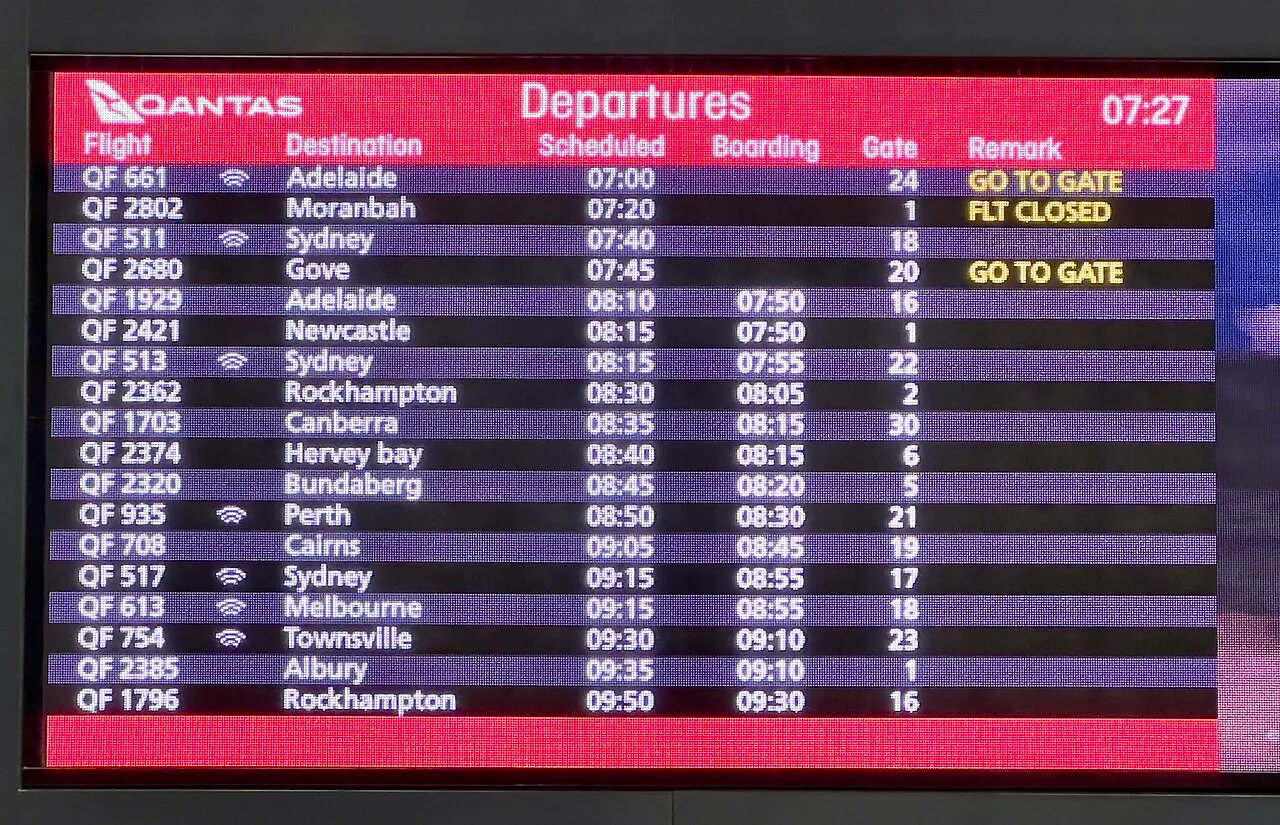
Boarding passes (paper or mobile) showing flight number, date, and booking reference. Booking confirmation email with scheduled departure and arrival times. Photos of departure boards showing delayed status and revised times — include the airport clock in frame if possible.
Boarding passes (paper or mobile) showing flight number, date, and booking reference. Booking confirmation email with scheduled departure and arrival times. Photos of departure boards showing delayed status and revised times — include the airport clock in frame if possible.
Airline app push notifications for delay updates and final arrival. Email delay notices from the airline — carriers often send "your flight is delayed" messages that help establish when they acknowledged the disruption.
If staff announce a reason, note it or ask for written confirmation — "technical fault" vs "weather" affects compensation eligibility. A photo of a handwritten delay voucher or hotel chit can document the airline's acceptance of responsibility.
Using flight trackers after the event
FlightRadar24 and FlightAware archive historical flights with gate and runway timestamps. Search your flight number and date; export or screenshot the landing and on-block times. These services are widely accepted in ADR proceedings when airline records are ambiguous.
FlightRadar24 and FlightAware archive historical flights with gate and runway timestamps. Search your flight number and date; export or screenshot the landing and on-block times. These services are widely accepted in ADR proceedings when airline records are ambiguous.
Official airport websites sometimes publish arrival tables — Heathrow, Gatwick, and Manchester archive recent arrivals. Cross-reference tracker data with airport records for stronger evidence.
For old claims (up to six years in England and Wales), trackers may still hold data — search early before archives purge. Your email inbox may retain booking confirmations years back.
Connecting flights and multi-leg bookings
Single booking (one PNR): measure delay at the final destination airport on the last flight. If Manchester–Heathrow–New York was booked together and you arrived JFK 4+ hours late because the Manchester leg was delayed, the operating carrier on the delayed segment owes compensation based on total distance and final arrival delay — even if the transatlantic leg itself departed on time.
Single booking (one PNR): measure delay at the final destination airport on the last flight. If Manchester–Heathrow–New York was booked together and you arrived JFK 4+ hours late because the Manchester leg was delayed, the operating carrier on the delayed segment owes compensation based on total distance and final arrival delay — even if the transatlantic leg itself departed on time.
Separate tickets: each flight stands alone. A delay on ticket one that causes you to miss ticket two does not create UK261 liability on the second airline unless that second flight was also delayed 3+ hours on its own. See /guides/flight-delay-missed-connection-codeshare-uk-2026 for self-transfer pitfalls.
Codeshare: claim against the operating carrier (whose logo is on the aircraft), not the marketing airline on your ticket — unless they are the same company. BA-marketed flights on American metal from the US to London fall outside UK261 entirely because American is neither UK nor EU.
Sample claim wording — what to put in the form
Subject line: UK261 Compensation Claim — [Flight Number] [Date] [Route]. Opening line: "I am claiming fixed compensation under The Air Passenger Rights and Air Travel Organisers' Licensing (Amendment) (EU Exit) Regulations 2019 (UK261) for flight [number] on [date] from [origin] to [destination]."
Subject line: UK261 Compensation Claim — [Flight Number] [Date] [Route]. Opening line: "I am claiming fixed compensation under The Air Passenger Rights and Air Travel Organisers' Licensing (Amendment) (EU Exit) Regulations 2019 (UK261) for flight [number] on [date] from [origin] to [destination]."
State scheduled arrival: [time]. Actual arrival (door open): [time]. Delay at final destination: [X hours Y minutes]. Flight distance: [km] — compensation tier claimed: £[amount] per passenger under Article 7.
List all passengers with names as on boarding passes. Attach evidence listed above. State: "The delay was not caused by extraordinary circumstances" unless you know the airline's stated reason — in which case rebut it specifically. Request payment by bank transfer within 28 days.
Use the calculator at /guides/uk261-flight-delay-compensation-uk#uk261-calculator before submitting. For rejections, see /guides/flight-delay-claim-rejected-appeal-uk-2026.